Prytaneion of Ephesus and Its Role in Ancient City Life
The Prytaneion of Ephesus was an important public building where civic administration and religious tradition met. Located within the ancient city near the state agora, it offers visitors a glimpse of how Ephesus organized public affairs and honored its sacred customs. Although only parts of the complex remain, the site adds valuable context to a walk through this celebrated archaeological destination in Turkey.
A customized Ephesus tour makes it easier to understand the Prytaneion as part of a wider civic center. Rather than viewing it as an isolated ruin, you can explore how it related to nearby streets, monuments, and public spaces.
What was the Prytaneion
In ancient Greek cities, a prytaneion commonly served as a civic and ceremonial center. Ephesus’s Prytaneion is associated with public functions and the worship of Hestia, goddess of the hearth. Ancient sources describe a sacred flame maintained in the building, symbolizing the continuity and shared identity of the city.
The Prytaneion’s position near the state agora reflects its connection to civic life. Public buildings in this area helped support the administration, ceremonies, and institutions that shaped the city. A guide can explain what is known about the site and how it fits into Ephesus’s broader history.
Explore the remains during your visit
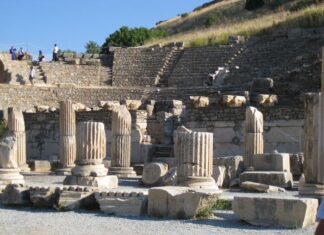
Today, visitors encounter foundations and architectural traces that hint at the building’s original scale and purpose. Look carefully at the layout and imagine the ceremonies and official activities that may have taken place within its walls. The remains are less imposing than Ephesus’s famous theatre or library, but they reveal a more civic and ceremonial side of the ancient city.
The nearby Domitian Temple offers another perspective on public monuments in Ephesus. Seeing both sites can help visitors compare civic and imperial architecture and understand how different institutions occupied the city center.
Ephesus is an outdoor archaeological site with uneven stone paths. Wear comfortable shoes, bring water, and use sun protection during warmer months. Check current opening and ticket information before you travel, as visitor arrangements can change.
Add the Prytaneion to a customized tour
A customized tour lets you explore at a pace that suits your group and spend time on topics that interest you, from ancient religion to civic organization. Your guide can connect the Prytaneion with the state agora and nearby streets, making the remains easier to interpret.
For help planning a visit or arranging a personalized route, contact our team. If you are planning a longer itinerary, Turkey in 7 Days offers ideas for combining Ephesus with other cultural destinations around the country.
Travelers continuing into the Balkans can explore Medieval Bulgaria for a different chapter of regional history, with historic towns and monuments shaped by the Middle Ages.
Discover the Prytaneion of Ephesus
The Prytaneion reveals how civic identity, public administration, and religious tradition intersected in ancient Ephesus. Its surviving remains invite visitors to look beyond the city’s grandest landmarks and consider the institutions that supported daily life. Add the Prytaneion to a customized Ephesus tour for a fuller understanding of the ancient city.